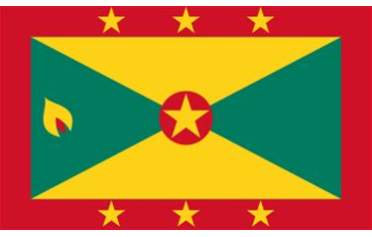
The National Flag of Grenada
The month of October is a particularly important and iconic period in Grenada’s socio-political history. October 19, 2026, marks the commemoration of the forty third anniversary of the derailment of the Grenadian revolution, which culminated with the US invasion of the island on October 25, 1983. The island of Grenada is one of a group of islands in the Eastern Caribbean with a current population of approximately 117,362. Grenada is known as one of the “island of spice” because of its production of nutmeg and mace, the covering of the nutmeg seed, which is also used as a spice. Grenada like other countries of the Global South, has a rich history of resistance to colonialism by the indigenous people. The French was ousted by the British in 1763 and ruled until Grenada was granted independence on February 7, 1974, with Eric Gary as the first Prime Minister.
Post Independence Grenada: Repression to Revolution
Eric Gairy’s entry into representational politics came by way of the Labor Movement; he was an extremely popular union leader and was able to mobilize people, influencing him leading to form the Grenada United Labor Party (GULP). With the advent of Universal Adult Suffrage in 1951, Gairy was elected to the Legislative Council, which was ultimately beholding to the British crown. Eric Gairy’s political party, however, dominated the local political process, which saw him making some moderate changes to labor practices, especially as it relates to women in the processing of cocoa. Through a series of confrontations between Gairy and the colonial establishment, he was eventually “pushed” out of politics and was succeeded by Herbert Blaise of the Grenadian National Party in 1960. Blaise and Gairy were fierce political rivals up to the 1972 elections when Gairy won 13 of the 15 seats; Gairy saw his overwhelming win at the polls as a mandate to push further for independence, which occurred on February 7, 1974.
The post-independence period under Eric Gary’s leadership, marked an incredibly significant period for Grenada especially, and the rest of the Caribbean in general. Gairy was a nationalist, an ultra-nationalist who became obsessed with his own popularity that eventually morphed into what is known as “the cult of the personality.” Historically, Gairy has always seen himself as the pivotal focus of the social movement, and not the masses. Despite some earlier meagre democratic gains for the workers and peasants, by the late 1960’s, Gairy had become more and more isolated from the working class, because of his continued capitulation to local capitalist interests, and old excesses of corruption and patronage. Most telling was the worsening of the socioeconomic conditions of the masses, and his development and use of a secret police unit known as the “mongoose gang” supplied by Chilean fascist leader, Augusto Pinochet, which was used to round up, terrorize, and detain dissenters.
The worsening socioeconomic conditions locally, and the rise and increasing popularity of the Liberation Movement in Africa, was setting the stage for an innovative approach to activism and a new working class agenda in Grenada. This materialized organizationally with the formation of the New Jewel Movement (NJM), a merger of two organizations: Movement for Assemblies of the People (MAP), and Joint Endeavor for Welfare, Education and Liberation (JEWEL). Their ideological “thrust” was simple: working class orientation, interaction, and anti-capitalist. This ideological position and their involvement in the everyday struggles of the working class, solidified the integrity and status of the NJM, and further isolated the Gairy government from the working class. To stem the tide of the NJM’s growing popularity, the government unleashed severe brutality on dissenters especially NJM leadership, which were beaten and thrown in jail. Following a period of general labor union strikes by dockworkers, teachers, the Civil Service Union, faith-based groups, and sections of the local capitalists, the Gairy government approached independence with island wide civil unrest.
Eric Gairy and his government were a repressive, corrupt, and anti-working class administration; Gairy aligned himself with fascist regimes like Chile and South Korea; through his secret police unit, extra judicial killings were committed including the murder of Maurice Bishop’s father, Rupert Bishop, a day referred to as “bloody Monday” which was preceded by what locals called “bloody Sunday,” when Gary’s Mongoose Gang severely beat and jailed members of the NJM. Despite the brutal attacks against the New Jewel Movement and police violence against demonstrators, the NJM increased its reach, education, and mobilization of the Grenadian people. The program of the party was published in their 1973 Manifesto, which not only highlighted the urgent problems facing the Grenadian masses, but what should be done to meaningfully address these issues.
The Revolution and Working Class Democracy
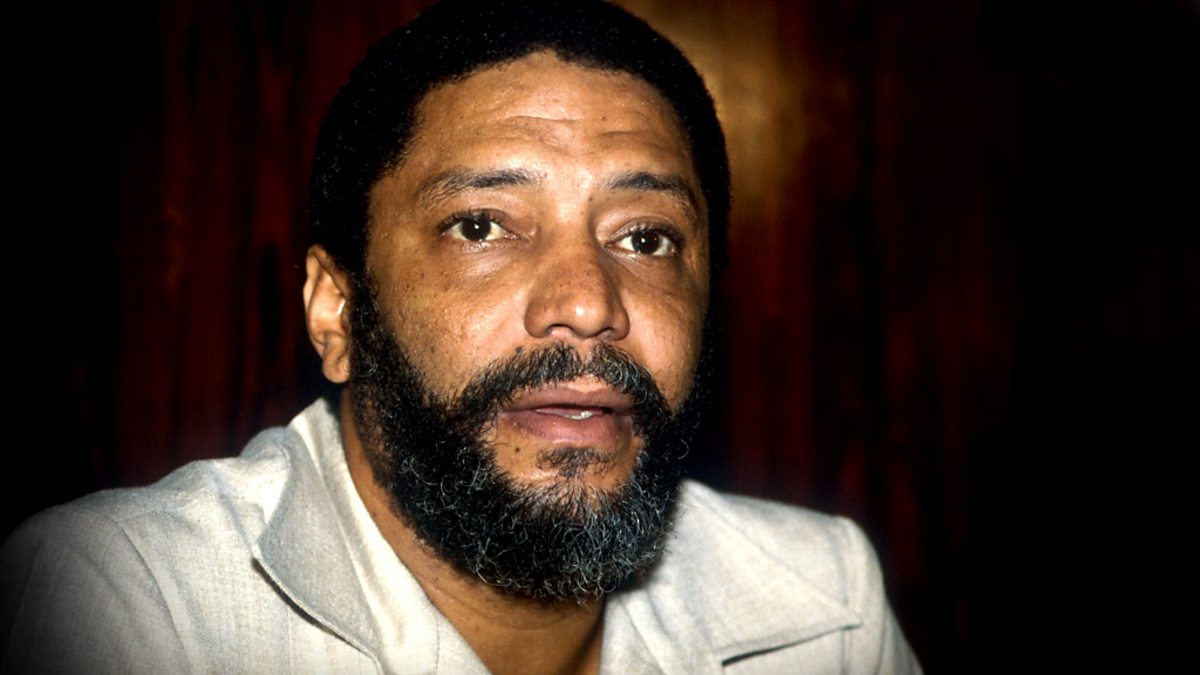
The working class of Grenada was liberated on March 13, 1979, initially by a group of New Jewel Movement (NJM) supporters, when an army barracks at True Blue was captured along with the radio station. As the news spread over the airwaves, masses of Grenadians flocked to the streets in support, which helped to solidify the takeover. There have been and continue to be detractors and enemies of the revolution who refer to the takeover of the Gairy government as a coup; this belies the mass support and participation of the masses in the success of the revolution. The people did not want to be ruled in the old way; the government could no longer rule in the old way, by definition this is a “revolutionary situation.” The NJM on taking over fundamentally broke with the past in ideology and strategies of governing; it was a new era of socioeconomic development and politics, it was a revolution. The Peoples Revolutionary Government (PRG) with Maurice Bishop as Prime Minister, was now in control of taking Grenada onto a new path of progressive, socioeconomic development.
Maurice Bishop, leader of the NJM made this statement in a radio broadcast on March 13, 1979: “People of Grenada, this revolution is for work, for food, for decent housing and health services, and for a bright future for our children and grandchildren. The benefits of the revolution will be given to everyone regardless of political opinion or which political party they support. Let us all unite as one ....” This was not an empty or sensational political statement; it became one of the main pillars of the Grenada Revolution, participatory democracy, working class democracy. The PRG on taking office, was facing an “uphill” battle to transform the society from economic decline and political backwardness, into a society with a growing and robust economy capable of addressing the needs of its people, and raising their level of political consciousness, to meaningfully participate in the building of their new nation.
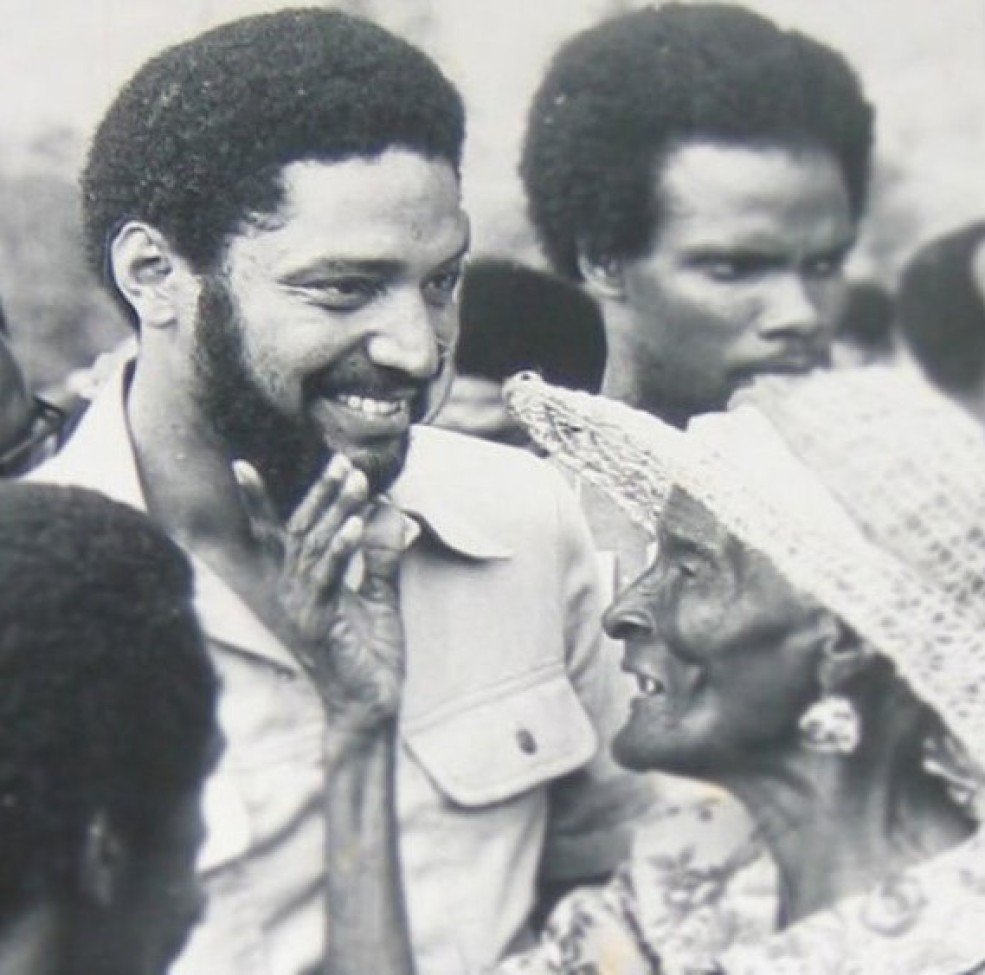
Woman from Carriacou greeting Maurice Bishop - Photo: Grenada, The Peaceful Revolution
Although faced with monumental challenges, the PRG was able to make significant improvement in the living standards of the working class. Creative and strategic planning, interaction and cooperation with the Private Sector, and a population willing to make sacrifices and supportive of the inclusionary process, saw huge and encouraging changes in Grenada’s socioeconomic structure: School fees were cut in half; free education for all children was provided within six months of taking office; establishment of a Social Security System for all Grenadians; free Health Care; the Unemployment Rate reduced from 49 percent to 14 percent; implementation of a National Literacy Program; development of a Public Sector with profit-making state farms inherited from the Gairy administration; establishment of the Grenada Development Bank (GDB) which provided loans and financing on reasonable, and favorable Terms to small and medium-sized farmers and business people.
It could be reasonably argued that the “crown jewel” of the revolution is the construction of the international airport at Point Salines in St George, the capital of Grenada; the airport has since been renamed Maurice Bishop International Airport. Ironically, the site was initially chosen by British economic experts in 1954; “feasibility studies for a new airport were subsequently carried out in 1969 (by the British), 1976 and 1977 (by the World Bank), confirming that Grenada needed a modern airport and that the best site would be the southern peninsula of Point Salines. Both the GNP government and Gairy’s regime ignored the studies, however, and no new airport was ever built.” From the book Grenada, The Peaceful Revolution, by Catherine Sunshine and Philip Wheaton. Opportunistically, Eric Gairy, during a visit to the area, with members of his government, commented that this would be the site for a new airport. The construction of the new airport was not only a socioeconomic decision, but one rooted in creating for Grenada a new place in the social history of former colonies: cultural pride founded on self-determination and participatory democracy.
Imperialism’s Response to the Grenadian Revolution
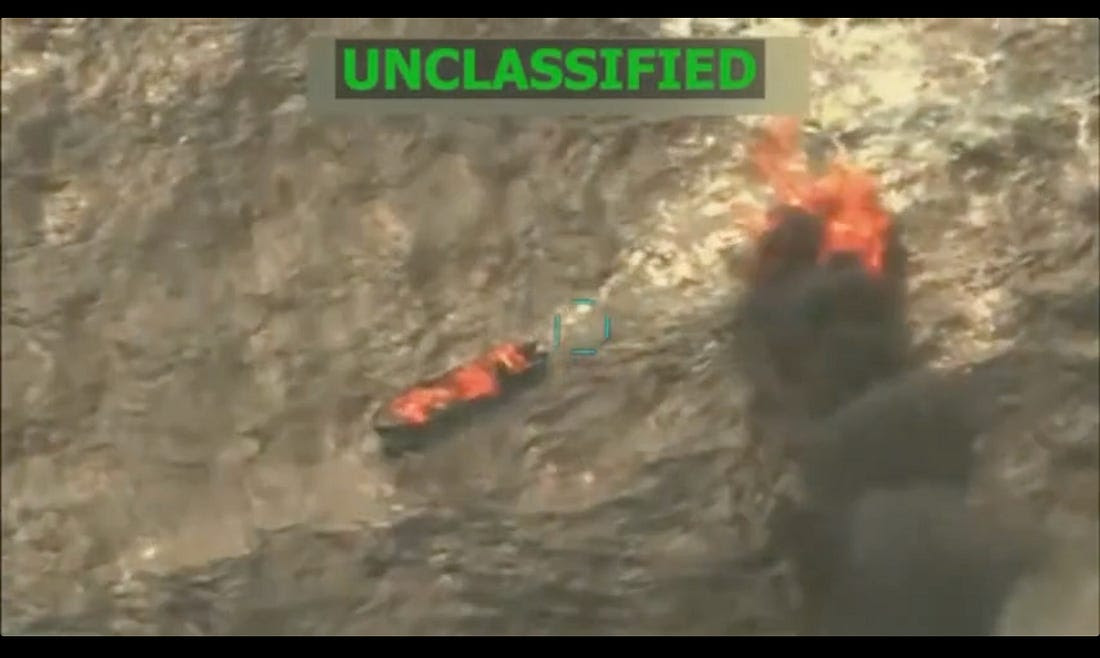
The US invasion of Grenada had nothing to do with US national security; Grenada was no threat to the United States. It was justification to crush a progressive socioeconomic system, derail an equalitarian project, destroy the self-determination of a people, and exert US hegemony over the region. The United States began “rehearsing” for their intervention before the revolution was three years old. In 1981 the US conducted naval maneuvers on the island of Vieques, off Puerto Rico, called “Ocean Venture 81,” which included a mock invasion of Grenada. The US President at the time Ronald Reagan, referred to the construction of the airport as a “ruse for Soviet-Cuban militarization.” The Reagan administration totally ignored the fact that the airport construction project was welcomed and supported also by civil society groups in Grenada.
To further undermine the support of the PRG and reverse the revolutionary process, US imperialism and local reactionaries, carried out a number of destabilization tactics on the island: threats of labor strikes and other disruptive tactics from Trade Unions, planned power outage, and arson. The worst and most desperate of these destabilization tactics was the June 19, 1980 bombing at the Queens park stadium in St George. Thousands of Grenadians had gathered to honor two patriots, Tubal Uriah Butler, and Alister Strachan. During the function, a massive blast occurred immediately below where some ministers of government including the Prime Minister were seated; the explosion resulted in three young women being killed and almost 100 people injured.
Maurice Bishop speaking in New York, laid out not only the ridiculousness of the US’s claim about “national security” but the real intent behind crushing the Grenadian revolution: “They give all kinds of reasons and excuses – some of them credible, some utter rubbish. We saw an interesting one recently in a secret report to the State Department…That secret report made this point: that the Grenada revolution is in one sense even worse – I’m using their language – than the Cuban and Nicaraguan revolutions because the people of Grenada and the leadership of Grenada speak English and therefore can communicate directly with the people of the United States…But I want to tell you what that same report said that also made us very dangerous. That is, that the people of Grenada and the leadership of Grenada are predominantly Black. They said that 95 percent of our population is Black … and if we have 95 percent of predominantly African origin in our country, then we can have a dangerous appeal to 30 million Black people in the United States.”
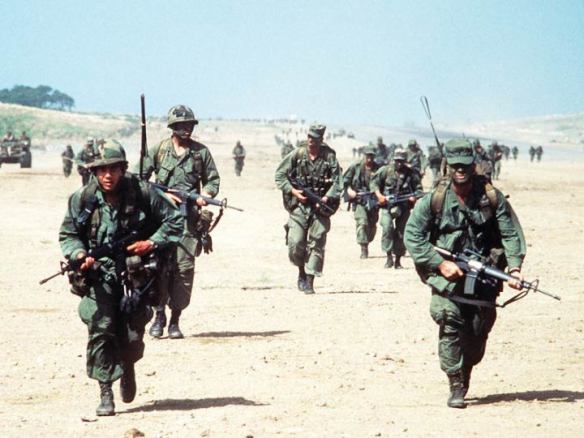
US troops in Grenada, October 1983 - Photo: warhistory.org
The Legacy of The Grenada Revolution
One of the critical activities of the New Jewel Movement (NJM) was the raising of the political consciousness of the people. For revolutionary movements, its not only important to discuss with the masses the problems they face, but also offer solutions, and most critical, what role do they play in the transformation of the society. This basic and fundamental premise continued into the post revolution period by the Peoples Revolutionary Government (PRG). One sociologist remarked that humans must first satisfy their basic social needs, before they can actively engage in politics, the arts, or religion. This theory came to real-life realization after the revolution; people were experiencing an improvement in their quality of life, through the social programs the PRG was implementing. Moreover by way of voluntary community service, rallies, meetings, the formation of a national Women Organization, and women occupying positions in government, formation of a Youth Organization, the interaction between the PRG and other sections of the populace, the support for the revolution expanded, and it was the general feeling that this process, this new era of Grenadian life should be protected and solidified.
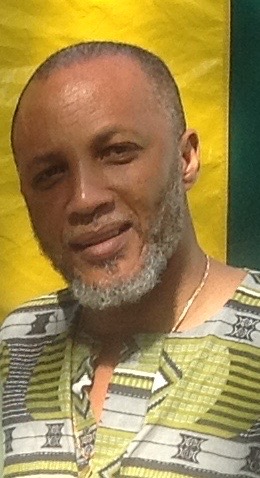
Kwabena Nyack, one of the founders of a Grenadian diasporan organization based in the UK, had this to say: “ When we said, ‘Forward Ever, Backward Never,’ it was not a slogan, but a declaration of faith in our own humanity. That spirit continues through Grenada Forward Ever, an organization dedicated to preserving the lessons of that transformative period and connecting them to the urgent struggles of our time.” The people of Grenada must never forget that “transformative” period of the country’s life; they are the beneficiaries of a courageous and decisive history as short-lived as it was. The best display of appreciation in paying homage to those patriots and heroes of the revolution, is to carry on the struggle for sovereignty, self-determination, and a society free of oppression and exploitation.
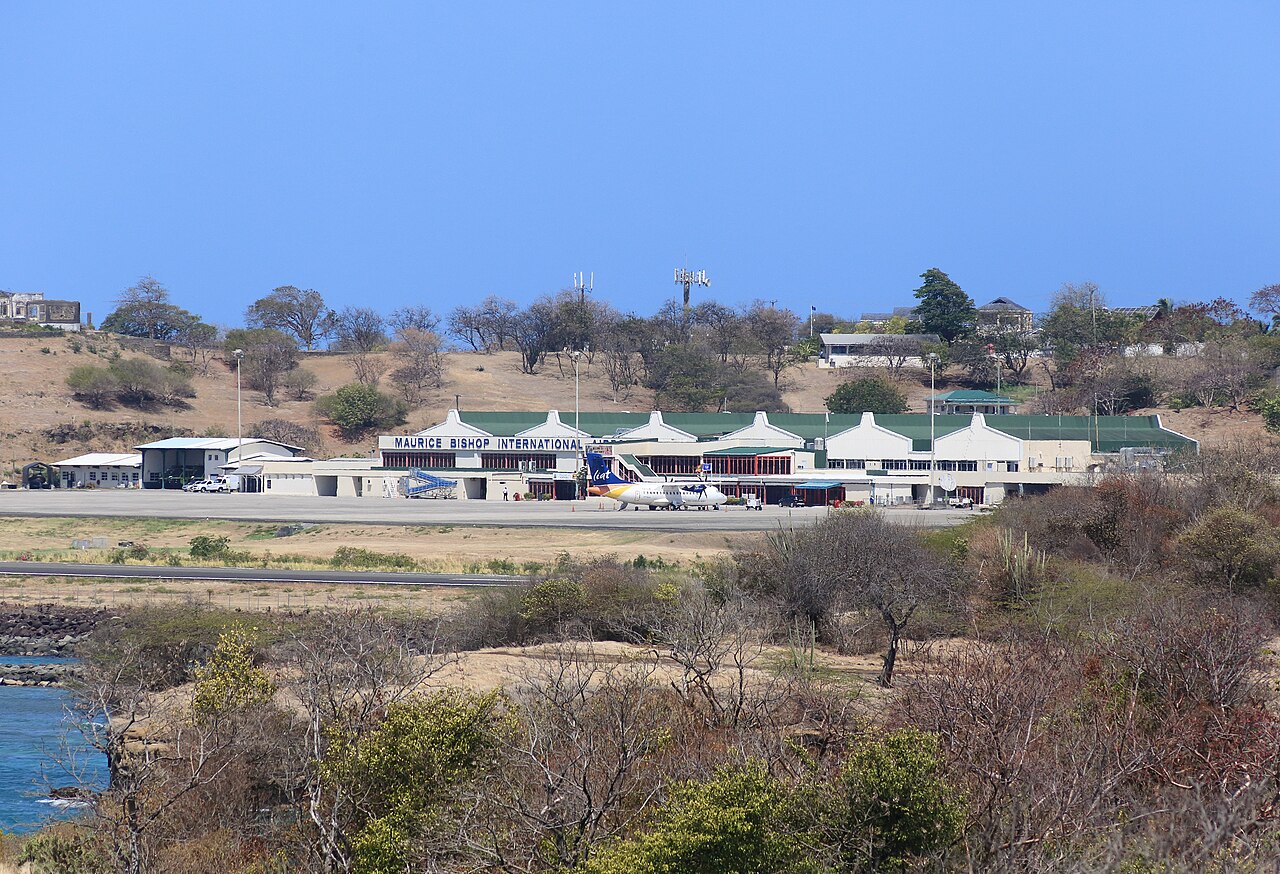
Maurice Bishop International Airport, St. Georges, Grenada - Photo: Wikipedia
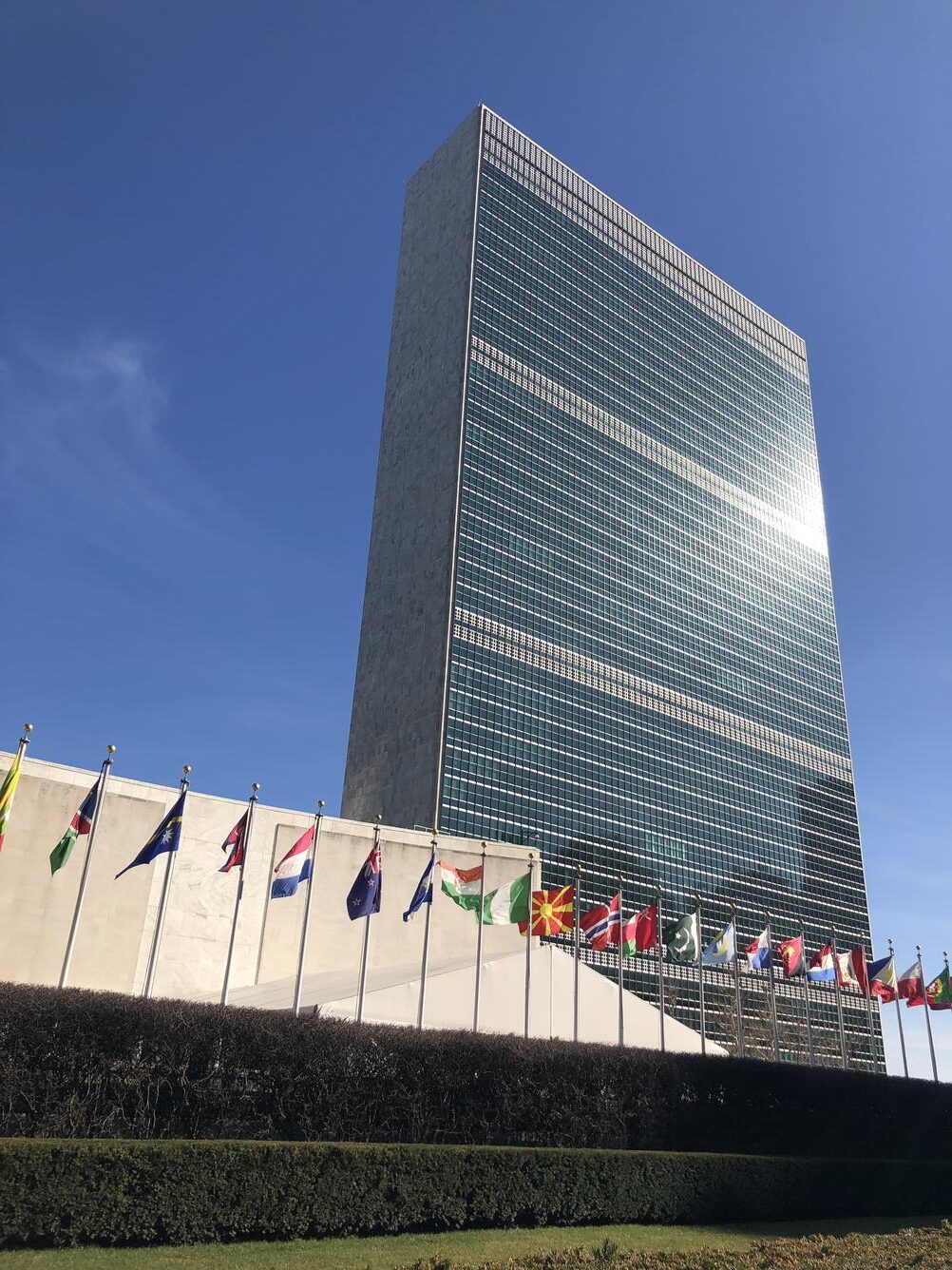
The people of Grenada must expose and bring the weight of the international community to bear on the United States, to truthfully reveal and turn over to the Grenadian people the remains of Maurice Bishop and his comrades. The government of Grenada, whichever party is in power, must file a formal complaint with the legal entities of the United Nations regarding this matter; it is owed to the families of the martyrs and owed to the Grenadian people especially.






Share with your network